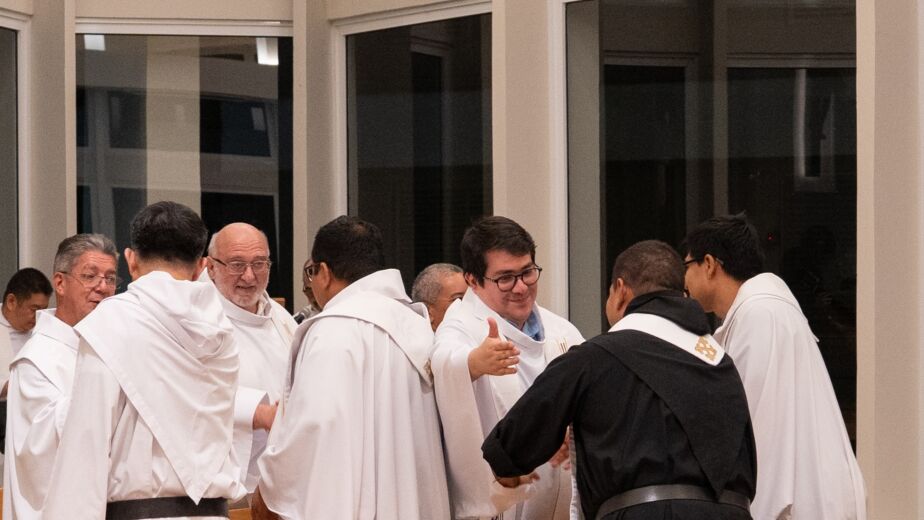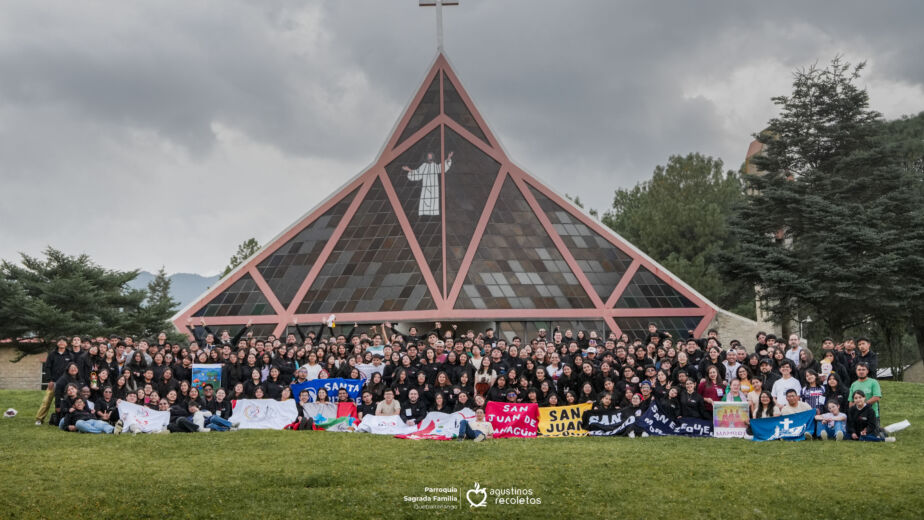


The Kairos Congress explored Christian initiation as a journey that requires time, formation, and genuine relationships. The speakers encouraged participants to trust young people and walk alongside them so they can live their faith with freedom and responsibility.
An experience can awaken faith. But what helps it keep growing when a gathering, pilgrimage, or congress ends? This question ran through the sixth session of the Kairos Congress, devoted to Christian initiation under the title “How is faith kindled?”
Saturday continued with contributions from priest and biblical scholar Fabio Rosini, philosopher Fabrice Hadjadj, Salesian sister Constance Chanda Nsofwa, and Dominican theologian Thomas Joseph White. Drawing on their different experiences, they explored how to accompany young people so that their encounter with Christ transforms their lives and they find a home in the Church.
The story of Emmaus once again guided the reflection: “They recognized him in the breaking of the bread.” After walking and listening, the disciples discover Jesus’ presence in a shared gesture. Christian initiation invites us into that relationship, to nourish it through the sacraments and learn to live it with others.
A faith that engages the heart and mind
Thomas Joseph White emphasized that Christian formation reaches both the heart and the mind. Growing in faith involves understanding what we believe, asking questions, and learning to express that hope.
The Dominican emphasized the importance of offering young people a solid formation that engages with the questions of their time. Questions about the human person, science, culture, and the meaning of life deserve attention and thoughtful responses.
This learning takes place in relationships of love and respect. For White, communicating the truth and recognizing the dignity of those who seek it are inseparable aspects of evangelization.
His talk encouraged trust in young people’s ability to deepen their understanding. The Church’s intellectual and spiritual tradition offers a wealth of resources that can help them understand their faith and live it with awareness.
Fabio Rosini: accompanying the birth of a new life
Fabio Rosini, a driving force behind the catechesis on the Ten Words, focused his talk on faith as a new life born of God. He emphasized the experience of recognizing God as Father and freely welcoming his Word.
To explain this, he drew on images of birth and growth. A seed holds the possibility of life, but needs care and time to develop. Similarly, accompanying someone in faith requires attention to the individual and the journey they are on.
Rosini also emphasized that formation should lead to greater independence and responsibility. Those who accompany others are called to help them grow, avoiding dependencies that prevent young people from taking ownership of their own journey.
Pastoral creativity, he explained, requires recognizing and valuing each person’s uniqueness. The task is to nurture the life that is beginning and create the conditions for it to mature.
Feeling at home and having something to contribute
Sister Constance Chanda Nsofwa placed relationships at the heart of youth ministry. Inviting young people to come closer is a first step; the next is to help them feel at home and find real opportunities to grow.
Drawing on her experience in Zambia, she advocated for formation that takes their abilities seriously. Young people can engage with profound ideas, take on responsibilities, and enrich community life with their ideas.
She shared how some of them suggested ways to experience Holy Week together and visit a prison. Through these experiences, she herself felt evangelized by the young people she accompanied.
Her testimony raised a question for those who lead groups and communities: are we making space for young people to offer ideas, make decisions, and put their gifts at the service of others?
Christian initiation has this dimension too: discovering that we belong to the Church and that our contribution matters.
Faith grows at a different pace
Fabrice Hadjadj offered a reflection on the pace of life today. In contrast to the search for immediate results, he reminded listeners that nurturing means accompanying growth that unfolds in its own time.
The image of the sower allowed him to speak of a faith that needs to take root. The speed with which a response appears is no guarantee of its depth or lasting value.
Hadjadj invited listeners to think about evangelization in terms of personal encounter and communion. Passing on the faith requires opening ourselves to others, sharing life, and accepting that a relationship cannot be programmed like a technical outcome.
To illustrate this, he returned to the disciples on the road to Emmaus. After encountering Jesus, they recognize that their hearts were burning as he spoke to them along the way. They come to understand their experience by remembering it, pausing, and looking again at their story.
This reflection sheds light on the meaning of kairos: recognizing an opportunity to encounter God calls for attention. Sometimes we need silence, remembrance, and conversation to discover what has begun to grow within us.
Sharing time, learning to love
Speaking about family, Hadjadj emphasized the value of time spent together. Being together, talking, and reflecting on everyday life are part of learning to love—a process that includes difficulties, wounds, and forgiveness.
He encouraged listeners to make themselves available to spend time with the people they love, without measuring every moment by its usefulness.
This perspective can also be applied to youth groups. Trust is built in spaces where there is time to get to know one another, listen, and share questions. A community grows when its members find a place in one another’s lives.
The Eucharist and a faith we share
Throughout the discussion, the sacraments emerged as a source of life for the Christian journey. The Eucharist was central to the reflection on encountering Christ and belonging to a community.
White emphasized the value of adoration and sacramental life as spaces where people can experience comfort, contemplation, and closeness to the Lord. He also pointed to the Catechism and formation resources as aids to understanding and expressing our shared faith.
The speakers offered different perspectives on passing on that faith in diverse contexts. The exchange highlighted the need to bring together knowledge of the Gospel, celebration, and accompaniment of each person.
A kairos for taking the next step
For the Augustinian Recollect Youth, this session offers an invitation to nurture what happens after an intense experience of faith. The return to everyday life calls for community, prayer, formation, and opportunities to serve.
Christian initiation opens a path on which young people can take an active role in their own growth: asking questions, getting to know Christ better, celebrating the faith, and making commitments alongside others.
What does your faith need to keep growing? Perhaps it’s spending time with the Gospel, exploring a question more deeply, taking part in the Eucharist, or finding a community to walk with. The Kairos Congress invited us to recognize that next step and take it freely, with others by our side and roots to ground us.