

The Kairos Congress began its Saturday program with a question: “Can a broken heart be healed?” Bishop Luis Marín placed the encounter with Christ, love and community at the heart of a journey of acknowledging wounds and rediscovering hope.
A tree can receive every care for its branches and still bear bad fruit if its roots are diseased. Using this image, Bishop Luis Marín explained to young people at the Kairos Congress one of the keys to healing: daring to look deep within and ask where the things that hurt us come from.
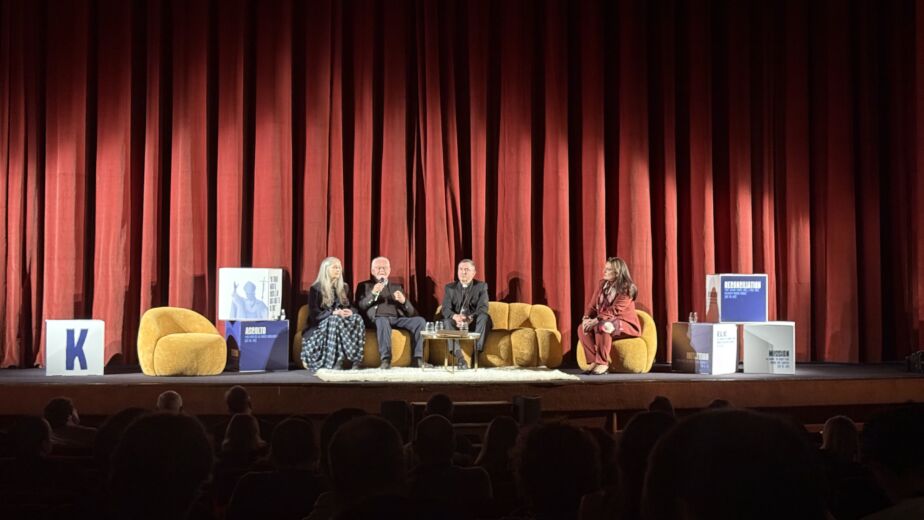
The fifth talk of the congress, which opened Saturday’s program, was dedicated to healing. Exploring the question “Can a broken heart be healed?”, the Augustinian friar shared the stage with theologian Justin Arickal and speaker Sophia Kuby, who trains young professionals.
Building on reflections on pilgrimage, listening and reconciliation, the session invited participants to recognize this time as a kairos: an opportunity to open their own stories to God and begin a process of transformation alongside others.
Getting to the root of what we experience
“Healing means renewing the roots, healing the roots,” Luis Marín said at the start of his talk. He encouraged everyone to face their own reality honestly and ask why certain wounds, attitudes or difficulties continue to shape their lives.
The image of the tree brought this reflection closer to everyday experience. Caring for what is visible matters, but growth requires healthy roots. People, too, need to understand what is happening to them and attend to what remains hidden beneath their reactions.
From this perspective, Marín presented healing as a path toward wholeness: recognizing our own fragility, closing off the sources of bitterness and letting the encounter with Christ illuminate our lives.
He spoke from his own experience of faith. He explained that Christ’s presence helps him face his limitations and gives him light to live with hope. This personal relationship was the common thread running through his contributions.
Starting with love
Asked about the wounds that come from not feeling loved, Luis Marín placed love at the heart of the Christian response. He invited everyone to start with a concrete experience: knowing they are loved and learning to love genuinely.
To do this, he pointed to the need to examine how we love. Love can be confused with a desire to impose our own interests or receive something in return. Purifying it means moving beyond ourselves and recognizing the value of others.
In accompanying young people, he placed particular importance on experience. Explanations of faith need to be accompanied by opportunities to discover love in our own lives, in giving ourselves to others and in our relationships.
The question of happiness was thus linked to the Christian vocation. Encountering God and giving ourselves to others opens a path to discovering who we are and how we want to live.
Prayer is an encounter with someone who is alive
Marín identified three ways to nurture this relationship with Christ: prayer, Sacred Scripture and the Eucharist.
Speaking about prayer, he invited everyone to ask whether they are truly entering into a friendship with the Lord. To pray is to spend time with a living person, share our lives with him and learn to listen.
He also encouraged everyone to read the Gospel with their hearts and in the light of their lives, letting the Word challenge them in the particular situations they face each day. Scripture can thus become a regular space for dialogue with God.
The Eucharist completes this journey as an encounter of love with Christ and the Christian community. In the bishop’s talk, the personal and communal dimensions remained closely connected.
One heart and one soul
“God is communion, the Church is communion,” Luis Marín reminded the audience. Encountering Christ also brings us closer to our brothers and sisters and calls us to share prayer, difficulties and hope with them.
Drawing on his Augustinian spirituality, he recalled the invitation to live with one heart and one soul on the journey toward God. He presented this unity as an experience of friendship and community in which everyone can find support and contribute their own gifts.
This message connects directly with the life of the Augustinian Recollect Youth. Groups and communities are called to be places where people feel safe enough to speak about their wounds, ask for help and support one another without having to pretend everything is fine.
In this context, kairos can begin with a simple gesture: sharing what weighs on us, accepting company or setting aside a moment to pray together.
Disarming hearts
A question from the audience turned the conversation toward the wounds of polarization. Luis Marín warned of the risk of turning faith into an ideology that sees enemies where there are brothers and sisters.
His response returned to the roots: examining what guides our lives and how we treat those who think differently. He spoke out against the contradiction of using God’s name to justify insults or aggression.
“The first thing we must do […] is disarm our hearts,” he said. He invited everyone to let go of the defensive attitudes that keep us entrenched, genuinely desire healing and choose communion with Christ and with others.
For young people, this call has implications for conversations, social media and community life. Living in accordance with the Gospel is also expressed in how we disagree, how we listen and how we respect the dignity of others.
Healing is a process that can take different forms
Justin Arickal and Sophia Kuby enriched the dialogue with their experiences of faith and accompanying others. Arickal emphasized the importance of every young person recognizing the value of their life and their story, especially when experiencing loneliness.
He also explained that healing can change how we live with a difficulty, even if it does not disappear as we had hoped. His testimony prompted reflection on the different paces and forms this process can take.
Kuby emphasized that the journey takes time and acknowledged the value of good psychological support. She also linked the experience of feeling loved by God to greater freedom to serve and participate in the world.
Speaking about evangelization, she stressed the need to respect each person’s freedom. Mission is born of a relationship with God and expressed through a welcoming presence, ready to accompany others without forcing responses.
Aim high and look far ahead
Toward the end of his talk, Luis Marín encouraged young people to look to the future with hope. He recalled an invitation from John XXIII that guides him in his own life: think big, aim high and look far ahead.
He called on everyone to recognize the challenges of the present and respond to them through a lived faith. Encountering Christ, he explained, awakens the desire to share the good news and bring hope to others.
Saturday morning thus offered a message for RAY International: care for the roots of life, strengthen friendship with God and build communities that support one another. What part of your life needs attention, help and renewed hope today? Making room for that question can be the first step in this kairos.