
The fourth session of the Kairos Congress explored reconciliation through the testimony of Jo Berry and Patrick Magee and the Christian perspective of Bishop Mikel Garciandia. It was an invitation to acknowledge wounds, disarm hatred and take steps toward peace.
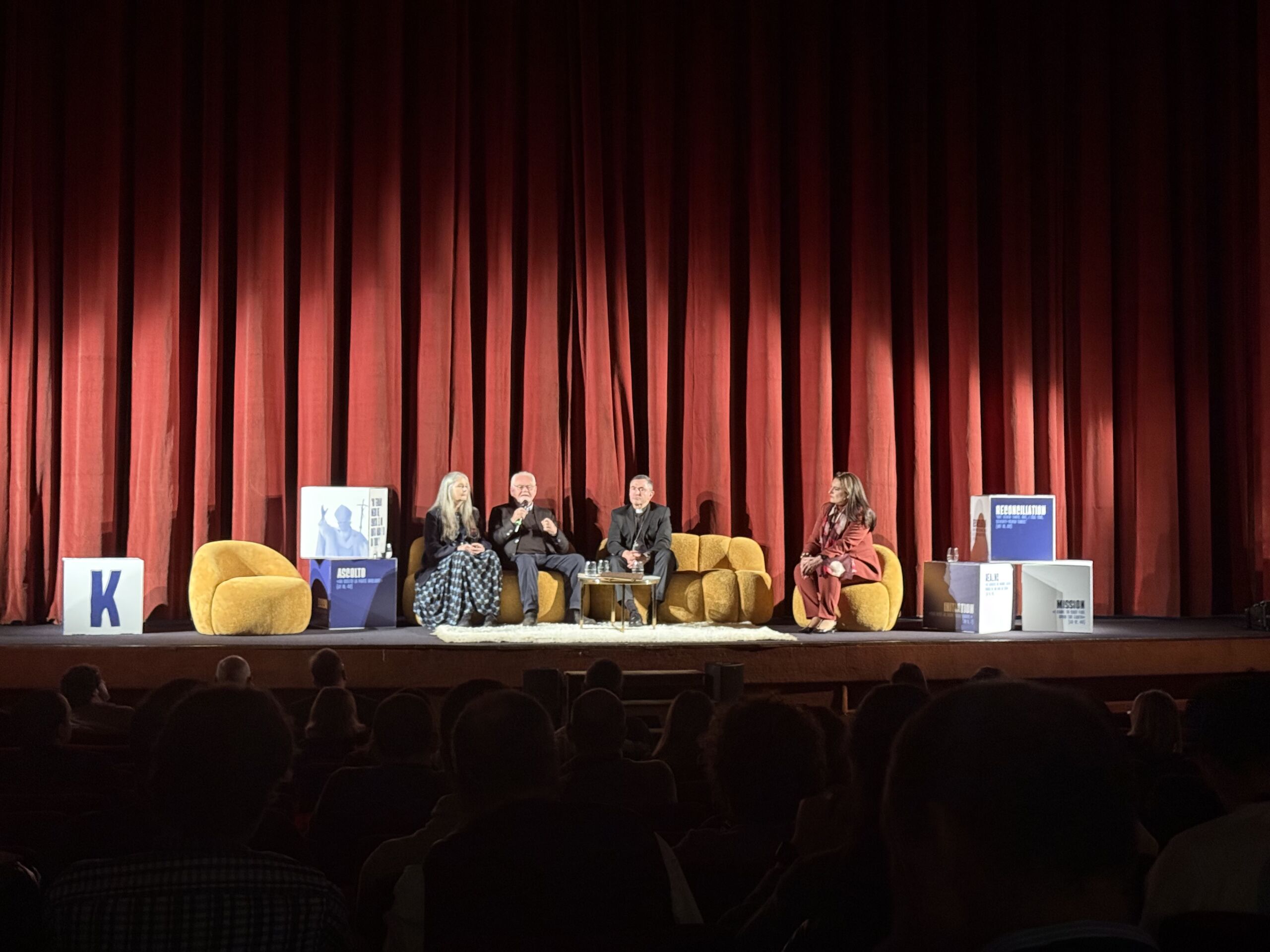
Sitting down to listen to the person responsible for your father’s death seems impossible. Jo Berry chose to do just that. Sitting beside her was Patrick Magee, who carried out the 1984 IRA bombing in Brighton that killed her father. That meeting opened a path of dialogue that both continue to follow and shared at the fourth session of the Kairos Congress.
Titled “Reconciliation: what wounds need forgiveness?”, the panel brought together Berry, Magee and Mikel Garciandia, Bishop of Palencia. Their contributions helped participants engage with a difficult reality: how to face the harm we have suffered, recognize the humanity of others and open up the possibility of a future when violence has shaped our own story.
The meaning of kairós, an opportune moment, took on special force here. There are moments when an opportunity opens up to listen differently, acknowledge responsibility or begin to heal. Making the most of them takes courage, support and respect for each person’s journey.
Looking the person who hurt you in the eye
Jo Berry explained that, after her father’s murder, she wanted to find a response that was not driven by hatred or revenge. Her desire to understand led her, years later, to meet Magee.
She came to that conversation afraid and unsure how she would feel. She wanted to meet the person behind the bombing and understand his story. During their meeting, Magee’s political explanations gave way to a conversation about the pain he had caused and about who Jo’s father had been.
For Berry, that shift was decisive: the full human impact of her father’s loss was beginning to be recognized. For Magee, listening to her meant facing the reality of the life he had destroyed and a family’s suffering.
Both described that meeting as the beginning of a transformation that continues today. Since then, they have shared their experience in dialogue and peace education settings, where they continue to learn from the questions and stories of others.
A journey that needs time and freedom
Berry highlighted the power of empathy in approaching stories shaped by conflict. Listening deeply has allowed her to see the person beyond the labels and question the divide between “us” and “them.”
Magee acknowledged that being certain you are right can stand in the way of that kind of listening. Personal contact with those who had suffered from the violence forced him to face what his justifications had left out.
Both stressed that their journey is not a formula that can be imposed on others. Every story needs its own time. Berry also pointed to the importance of protecting emotional safety: there are situations in which bringing together those who have suffered harm and those who caused it can create new wounds.
Their testimony offered a possibility without turning it into an obligation. Reconciliation requires freedom and genuine care for the people involved.
Standing with victims and opening paths of mercy
Bishop Mikel Garciandia shared his experience in an area of Navarre marked by violence and polarization. He recalled how he learned, first from his family and later as a priest, to accompany people facing threats.
“As Christians, we must always stand with the victims,” he said. Being close to them means acknowledging the harm done and making sure they are not abandoned in their suffering.
From that conviction, he also spoke about the initiatives he promoted during the Year of Mercy to bring people together. The way Jesus looked at Zacchaeus helped him show a mercy that seeks out those whom others consider beyond hope and opens up the possibility of conversion.
Garciandia stressed that reconciliation demands facing up to responsibility. At the same time, faith invites us to trust that people can change and to bring God’s mercy even to the places where doing so is most difficult.
The bishop recalled that he too needs that forgiveness. Recognizing our own fragility allows us to approach others with humility and let the Gospel challenge our resentments.
What do we do with our own wounds?
The conversation connected these experiences to the lives of young people. Although their circumstances may be different, they too can feel the weight of betrayal, a breakup, family conflict or a relationship marked by resentment.
The question in the session’s title invited people to acknowledge those wounds and discern how to face them. Sometimes, the first step is to ask for help or put what happened into words. In other situations, it may mean taking responsibility, asking for forgiveness or finding a way to make amends.
From the Christian perspective presented by Garciandia, reconciliation is born from an encounter with God’s love and transforms the way we respond. Knowing that we are forgiven opens a path to love, even when it is difficult.
This process offers no guarantee that difficulties will never return. It takes time and decisions we must make again and again. Berry and Magee showed that, even after years of dialogue, new questions and lessons continue to emerge.
Dreaming of peace and beginning to build it
In the final part of the panel, Garciandia connected prayer with the dream of a reconciled humanity. For him, dreaming and praying are deeply linked when that desire opens itself to God’s plan and becomes a commitment to peace.
He called for action: promoting initiatives that bring people together, working with other Christians and living redemption as a reality capable of changing lives and relationships.
For Augustinian Recollect Youth, this invitation finds a concrete expression in community. Fraternity is built by learning to recognize our own mistakes, care for those who are hurting and face conflicts with truth and charity.
The fourth session of the Kairos Congress left us with a personal question: what step can you take today to help a wound stop fueling hatred and begin to find a path toward healing? Taking that step may require help and time. Recognizing this can also be the beginning of a kairós.